The Fifteenth Amendment
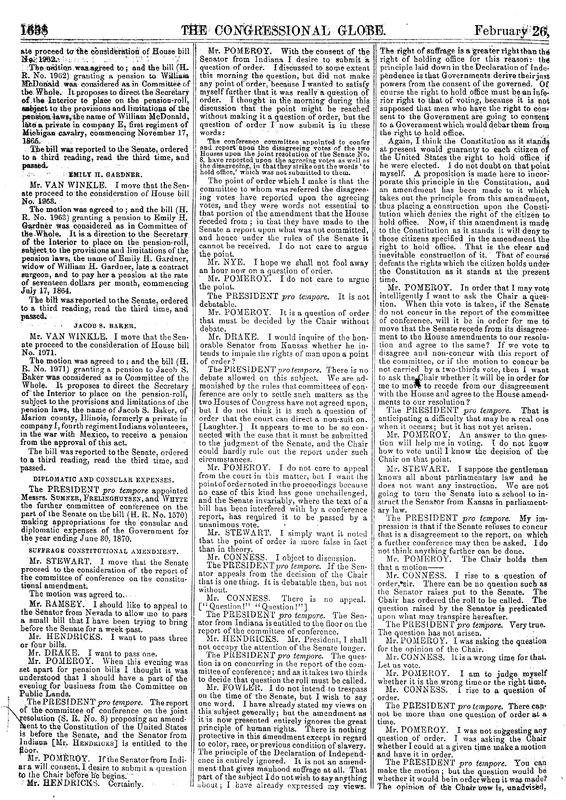
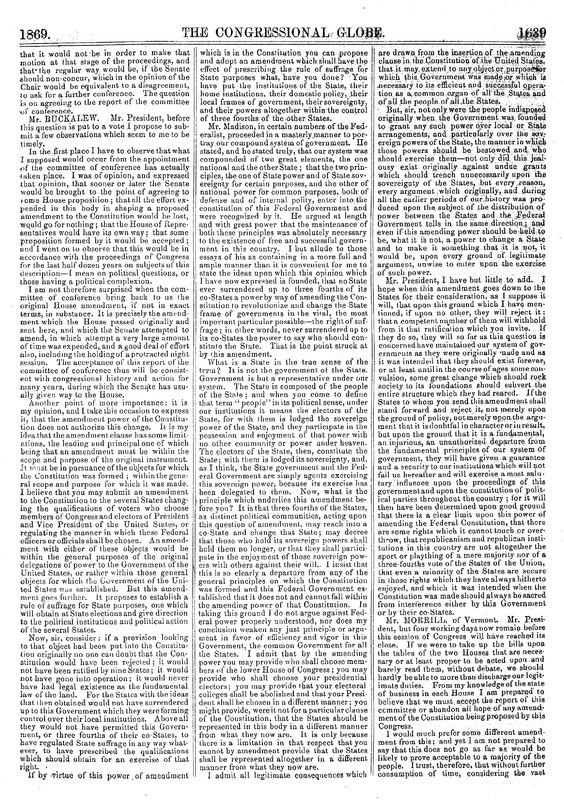
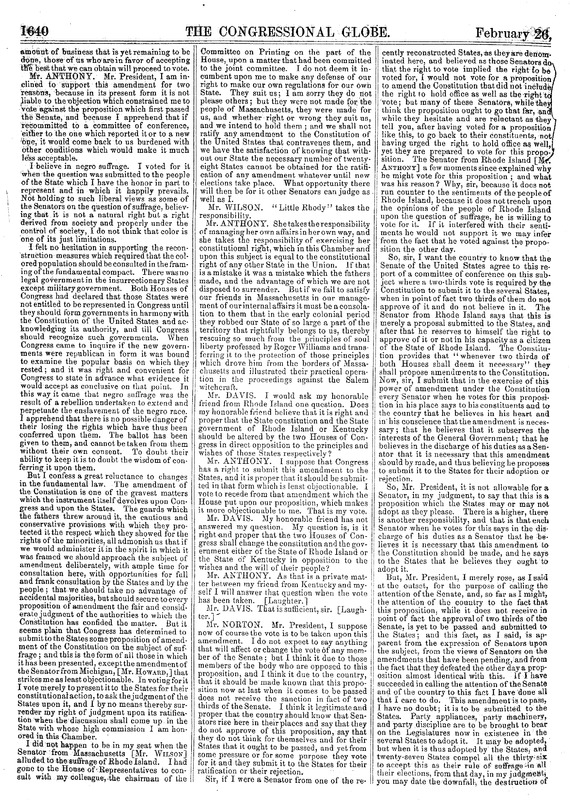
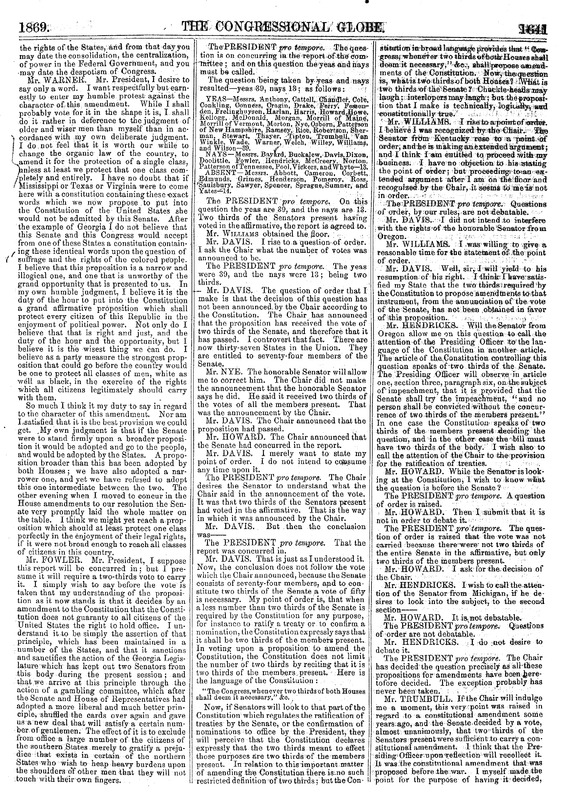
The Radicals passed the Fifteenth Amendment to guarantee Freedmen the right to vote and to fix the Fourteenth Amendment’s deficiencies because the Fourteenth Amendment did not include Black Suffrage. The states ratified the Fourteenth Amendment on July 28, 1868, but Radical Republicans continued to work on the Fifteenth Amendment. The House of Representatives passed the Fifteenth Amendment on February 25, 1869, by vote of one hundred and forty-four to forty-four. The Senate passed the Amendment on February 26, 1869, by vote of thirty-nine to thirteen. The Amendment encountered opposition when States ratified the amendment. The Women’s Suffrage movement opposed its ratification, as it did not guarantee Women’s Suffrage with Freedmen. Nevertheless, states ratified the Amendment on March 30, 1870. The Amendment gave Freedmen the right to vote and accomplished Radicals objectives with the Fourteenth Amendment. Vice President Shuyler Colfax gave a speech to Alexandrians to advocate for the amendment. He stated, “It seems to me very desirable that this question be settled now, and I entertain hopes and express the desire that it may be, by the ratification of the fifteenth article of amendment to the Constitution.” Republican politicians were able to pass the Fifteenth Amendment because of their electoral victories from 1866 to 1868. Republicans failed to obtain control of Congress after 1870 but maintained support to ratify the Fifteenth Amendment.
Freedmen in Alexandria supported the Fifteenth Amendment and advocated for its ratification through their local elected officials. The Alexandria Gazette depicted various instances where the Amendment passed through Congress. The Alexandria Gazette stated, “The Fifteenth Constitutional Amendment is making rapid progress toward its enactment into Constitutional law. Yesterday it was ratified by the Legislatures of the States of Michigan, Illinois, and Wisconsin.” The Amendment received substantial support from veteran abolitionists such as Wendell Phillips, Salmon P. Chase, and Frederick Douglas. Alexandria Freedmen supported the Fifteenth Amendment and appreciated support from veteran abolitionists and other members of the Republican Party.
African Americans worked with Unionists to create and ratify the Fifteenth Amendment to guarantee Black Suffrage. Congress created various drafts of the amendment before ratification and the 1868 election. Nevertheless, fierce debates on the amendment continued until 1869. The Congressional Globe provides detailed records of the debates. Senator Charles Sumner supported negro suffrage when he said, “Wherever you most need them [Freedmen votes] there they are, and be assured they will vote for those who stand by them in the assertion of Equal Rights.” The Fifteenth Amendment provided Freedmen in Alexandria with Black Suffrage. Additional measures were passed to protect Freedmen from intimidation and allow them to vote that protected against discrimination.
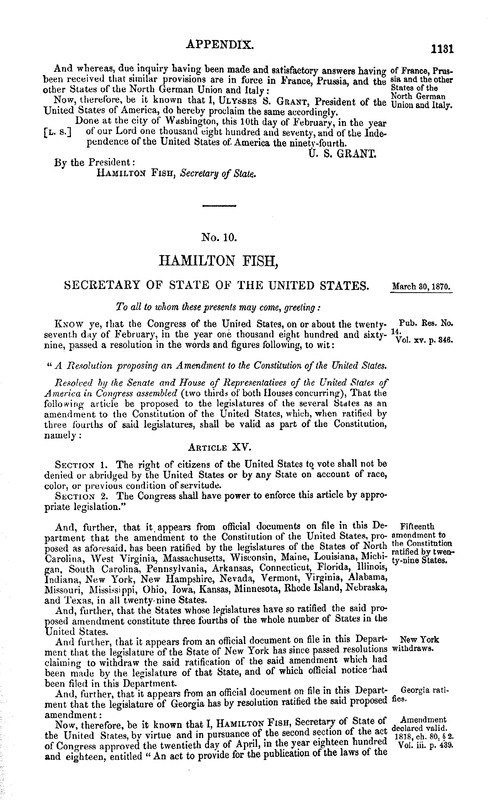
Virginia ratified the Fifteenth Amendment on October 8, 1869. The Radicals passed the Fifteenth Amendment to guarantee Freedmen the right to vote and to fix the Fourteenth Amendment’s deficiencies after having failed to impeach Johnson. The States ratified the Fourteenth Amendment on July 28, 1868 but Radicals passed another amendment to protect Freedmen and guarantee their right to vote. The House of Representatives passed the Amendment on February 25, 1869 by vote of one hundred and forty-four to forty-four. The Senate passed the Amendment on February 26, 1869 by vote of thirty-nine to thirteen. Various Senators opposed the Amendment such as Sumner. Nevertheless, it subsequently passed the Senate and guaranteed Freedmen the right to vote and prohibited voter discrimination on the grounds of race, color or previous condition of servitude. The Amendment encountered opposition when States ratified the amendment. Nevertheless, the States ratified the Amendment on March 30, 1870. The Fifteenth Amendment gave Freedmen the right to vote and accomplished Radicals objectives with the Fourteenth Amendment. Grant issued various statements to Congress from April 7, 1869 to January 10, 1869 that Virginia should be readmitted to the Union because the state drafted a new constitution and ratified the Fourteenth and Fifteenth Amendments. Freedmen in Alexandria demonstrated agency when they elected delegates to the convention to vote on their behalf.
Grant signed the Bill on January 26, 1870, that ended Virginia Reconstruction and subsequently guaranteed Freedmen’s rights in Alexandria, Virginia. Congress recognized that Virginia had fulfilled the requirements of state-level Reconstruction to be readmitted to the Union on January 26, 1870. Nevertheless, Congress stated that all state-level elected officials must be eligible for office under the Fourteenth and Fifteenth Amendments, Virginia must never disenfranchise citizens entitled to vote under the Underwood Constitution, abridge citizens right to hold office, or deprive citizens of their rights under the new free-school system. Virginia Freedmen fulfilled their goals to obtain suffrage that began in Alexandria, Virginia from the 1865 Colored Conventions. Military rule in Alexandria ended in 1869 before the ratification of the Fifteenth Amendment. Freedmen succeeded in improving their lives through debates and actions with the Freedmen’s Bureau and petitions to Congress and the President.