Alexandria Colored Convention 1865 & Republican Assistance
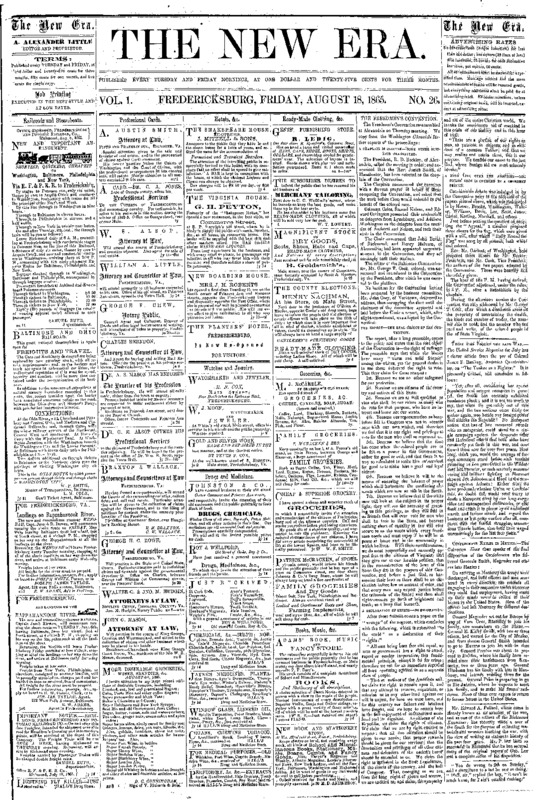
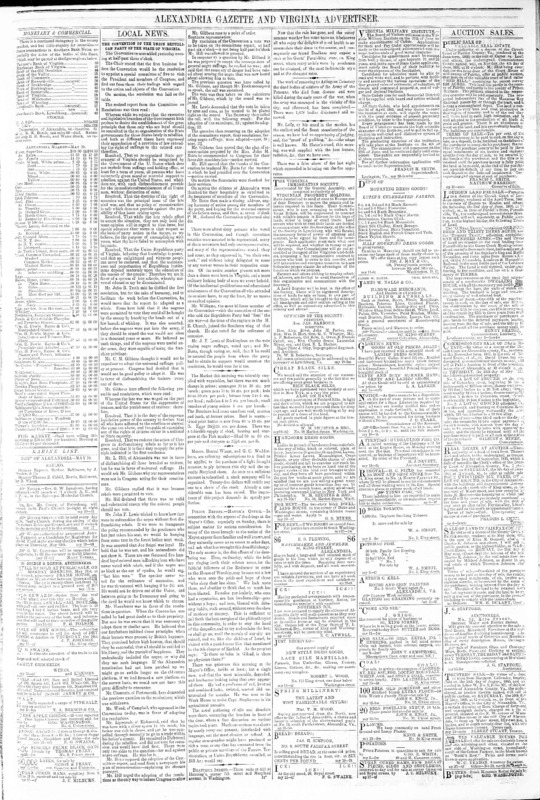
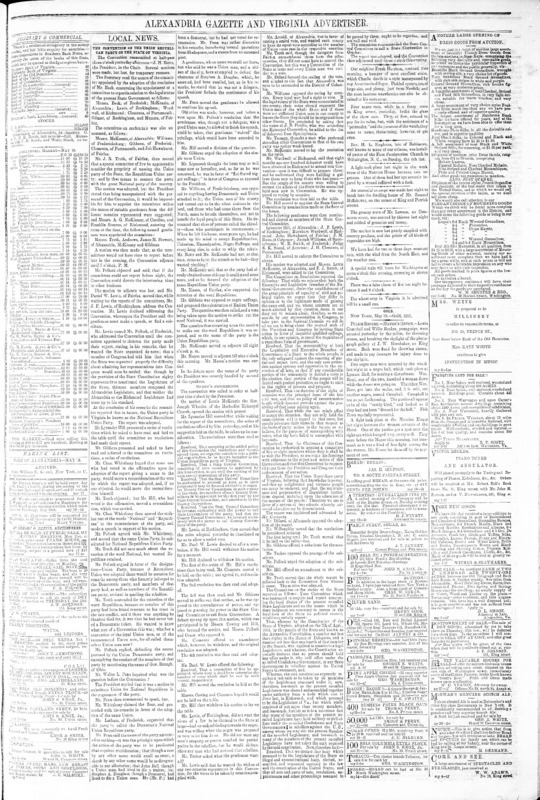 Address of the loyal Virginians to their friends in the North
 Black Reconstruction: An Essay Toward a History of the Part Which Black Folks Played in the Attempt to Reconstruct Democracy in America, 1860-1880.
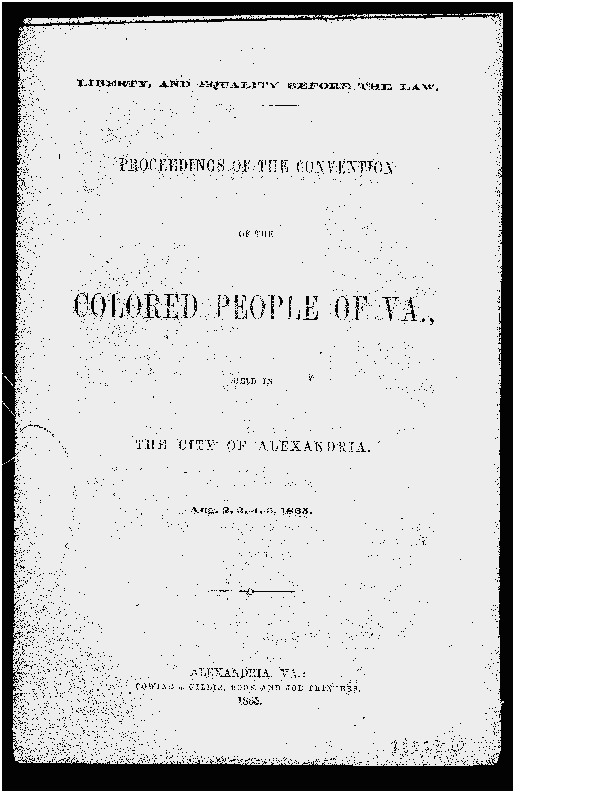
African Americans in Alexandria became emboldened to advocate for negro suffrage after emancipation in 1865, after the Civil War. Alexandria, Virginia hosted a Colored Convention from August 2, 1865, to August 5, 1865, to advance Freedmen’s rights and provide them with suffrage. Freedmen acknowledged African Americans are United States Citizens and entitled to equal representation. The Convention became the first occurrence where African Americans exhibited agency to advocate for their right to vote. This Convention attempted to place African Americans on the same level as white Northerners through public office and the ballot box and lobbied for Freedmen suffrage to allow African Americans to assist in the nation’s reconstruction. The Convention proved that Freedmen in Alexandria were intelligent and capable of Black Suffrage. Freedmen in Alexandria emerged as a large group to advocate for their interests and the Convention provided Freedmen with a voice in politics and daily life.
The Alexandria Colored Convention became the first time where Freedmen demonstrated agency through political debates and discussions. Alexandria native Rosier D. Beckley chaired the convention as president. The convention held various debates and discussions before it adopted a resolution that argued for Black Suffrage and equality. The Resolution stated, “The immutable laws of truth and justice entitle us to the same rights in the same Government with all others.” The delegates argued that they were entitled to the same rights as white Americans and they appealed to Governor Francis H. Pierpont to define his position on Black Suffrage within Virginia. Freedmen required support from the Republican Party after the Colored Convention to continue their ideas created in the resolution.
Alexandria Freedmen used the media when they advocated for suffrage after the Colored Convention. Freedmen published the Address of a convention of Negroes held in Alexandria Virginia August 1865 that highlighted their hopes and fears after the Emancipation Proclamation and the Thirteenth Amendment. The address acknowledged that African Americans were emancipated and stated how little had changed since the end of the war. For example, Freedmen were still viewed as inferior to white northerners despite serving alongside northerners in the Union Army. African Americans argued they required greater protection to remain free after 1865 because they were still surrounded by Southern former slave owners. Various states across the nation had not ratified the Thirteenth Amendment by the time of the Alexandria Colored Convention that increased Freedmen’s fears of revocation of their rights. This became the first instance where Freedmen as a group advocated for their rights to protect themselves and elevate their status on the same field as white northerners and southern slave owners.
The Alexandria Colored Convention adopted a resolution on Freedmen education to improve Freedmen’s lives. Freedmen began to obtain an education from the creation of the Freedmen’s Bureau on March 3, 1865. Freedmen across Virginia had the initiative to receive an education and better themselves after the war. African Americans in Richmond recorded approximately one thousand Freedmen in schools by the end of April 1865. The Alexandria Colored Convention drafted ideas that became debate topics in the Virginia Constitutional Convention such as Education and Black Suffrage. Freedmen in Alexandria were the first to raise concerns on their living conditions, education standards, and Black Suffrage that became part of the Freedmen’s Bureau that supported Freedmen after the Civil War.
Freedmen in Alexandria became outraged at their treatment during the war and were motivated to end discrimination against African Americans. Freedmen in Alexandria analyzed the hardships and tragedy they were subjected to as slaves and concluded that Freedmen in Alexandria, Virginia, and across the United States deserved the right to vote to protect themselves and advocate their interests to the nation. They shared their experiences at the Convention and achieved solidarity among African Americans to seek help from the Republican Party.
The Freedmen’s Bureau established on March 3, 1865, encountered opposition by President Andrew Johnson as he attempted to veto the Bill and hinder Freedmen. Johnson argued, “it is not component for the General Government to extend the elective franchise in the several states.” Johnson refused to grant Black Suffrage to all Freedmen in a quick manner that angered Republicans. Johnson vetoed the Freedmen’s Bureau Bill on February 19, 1866, and subsequent Bills such as the 1866 Civil Rights Act.” Republicans obtained enough votes to override his veto on April 9, 1866. Republicans began to advance legislation to protect Freedmen that impacted Alexandria Freedmen. Republicans enacted protections to improve Freedmen’s lives that allowed them to serve on juries, receive equal wages and restrict the hours that Freedmen can work for white Americans without a contract. Freedmen required the Republican Party to help them obtain suffrage after the Civil War. The Virginia Republican Party worked to provide Freedmen with suffrage after 1865. The Republican Party of Virginia worked to prevent the expansion of slavery into other states and territories. Republicans supported Black Suffrage at the Alexandria Convention for three reasons: that the ballot would protect Freedmen, Black Virginians deserved equal rights as white Virginians, and Freedmen were intelligent and able to decide who should become their elected officials. Black Suffrage in Alexandria emerged after Freedmen obtain a newfound sense of proprietorship or ownership over themselves and began to act independently of white northerners or Southern slave owners. Freedmen in Alexandria used the opportunity with the Republican Party to push for Black Suffrage.
Alexandria Freedmen advocated for suffrage that led to riots such as reported on January 1, 1866. The riot may or may not have been connected to Freedmen’s attempts to obtain suffrage. Nevertheless, Radical Republicans used the event as a tool to argue that the South is not ready to represent itself in Congress.The Alexandria negro riot resulted in the death of approximately fourteen Freedmen and two white citizens.[9] The riot enhanced African American’s ability to advocate for their rights despite opposition from Conservatives. Alexandria Freedmen published an article in the New York Times on August 13, 1865, before the Alexandria riot that depicted African Americans as a group advocating for their rights. Freedmen stated, “we thought the Freedmen's Bureau was organized and clothed with power to protect us from this very thing, by compelling those for whom we labored to pay us, whether they liked our political opinions or not!” Freedmen argued that they were intelligent and capable to utilize the right to vote in subsequent elections. The riot depicted Freedmen’s agency to work toward Black Suffrage and enact change in Alexandria.
Freedmen lobbied the Virginia and Federal governments for additional protection beyond the Thirteenth Amendment in 1865. Freedmen realized they were entitled to the same rights and protections as white Americans because they were human beings. Freedmen in Alexandria experienced economic hardship after the Civil War and were forced into menial occupations after the war within day labor occupations such as the shipping industry. The Freedmen’s Bureau Bill created Freedmen’s Village and protected Freedmen in Alexandria when the Act divided cities and counties into separate districts led by Military Officers and supervisors.